Victorian Inns and Historic Bed and Breakfast Homes: Preserving Mendocino Village's Architectural Legacy
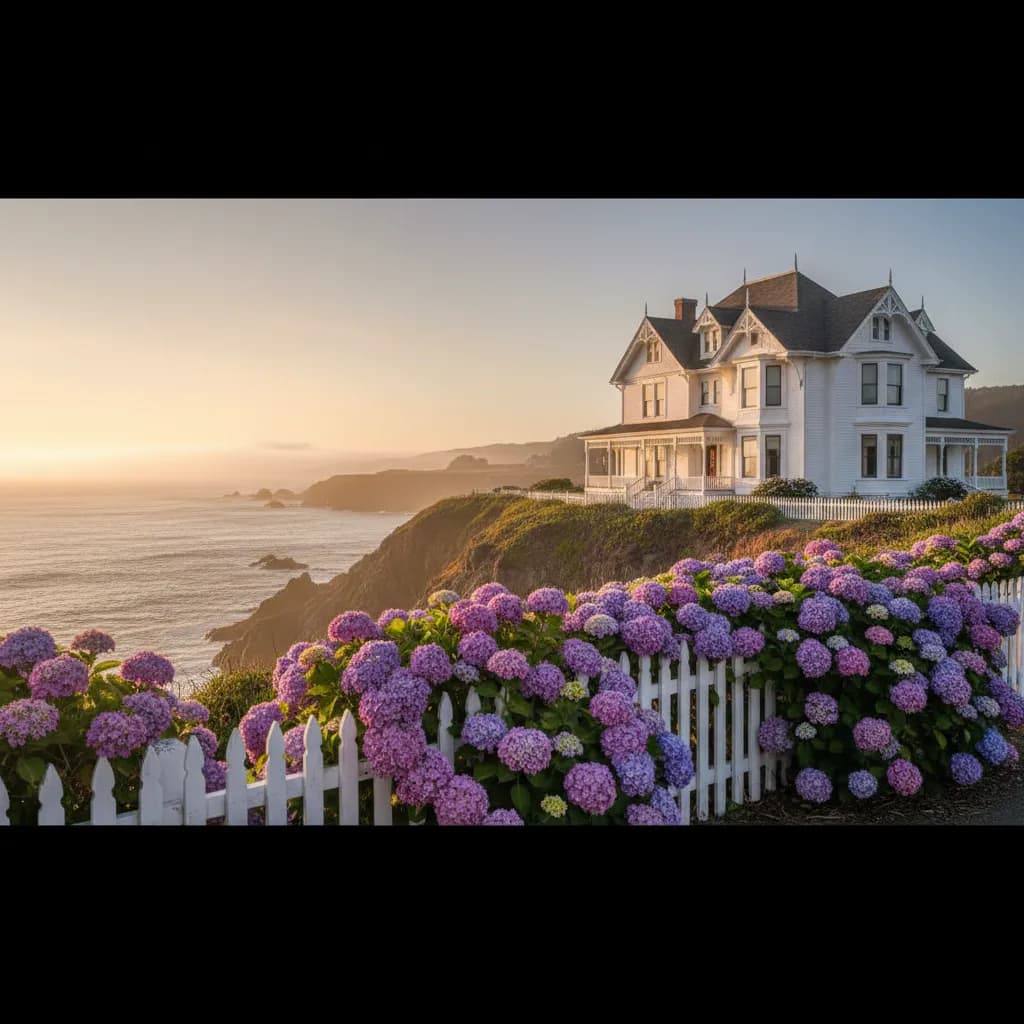
The Mendocino Coast's ancestral homeland of the Pomo and Yuki peoples transformed dramatically in the 1850s when lumber baron Henry Meiggs established a mill town on the dramatic headlands.
What began as a rough logging settlement evolved into an architectural jewel box, where New England transplants built elaborate Victorian homes that still crown the bluffs above the Pacific.
Today, many of these historic structures serve as bed and breakfast inns, offering visitors an immersive journey into Northern California's logging era while preserving the village's distinctive character.
These meticulously maintained homes represent more than accommodation; they stand as living museums where Victorian architecture meets coastal California hospitality.
The Lumber Baron Legacy: Victorian Architecture Takes Root
Mendocino village's Victorian architecture tells the story of 19th century prosperity built on coastal redwood forests.
Between 1852 and 1880, the town's lumber mills shipped millions of board feet to San Francisco, creating wealth that manifested in increasingly elaborate homes.
Unlike California's mining towns, which often favored simple structures, Mendocino's New England founders recreated the architectural styles of their eastern homeland.
The village's most distinctive historic inns showcase various Victorian architectural styles.
Gothic Revival homes feature steep gabled roofs and decorative bargeboards, while Italianate structures display bracketed cornices and tall, narrow windows.
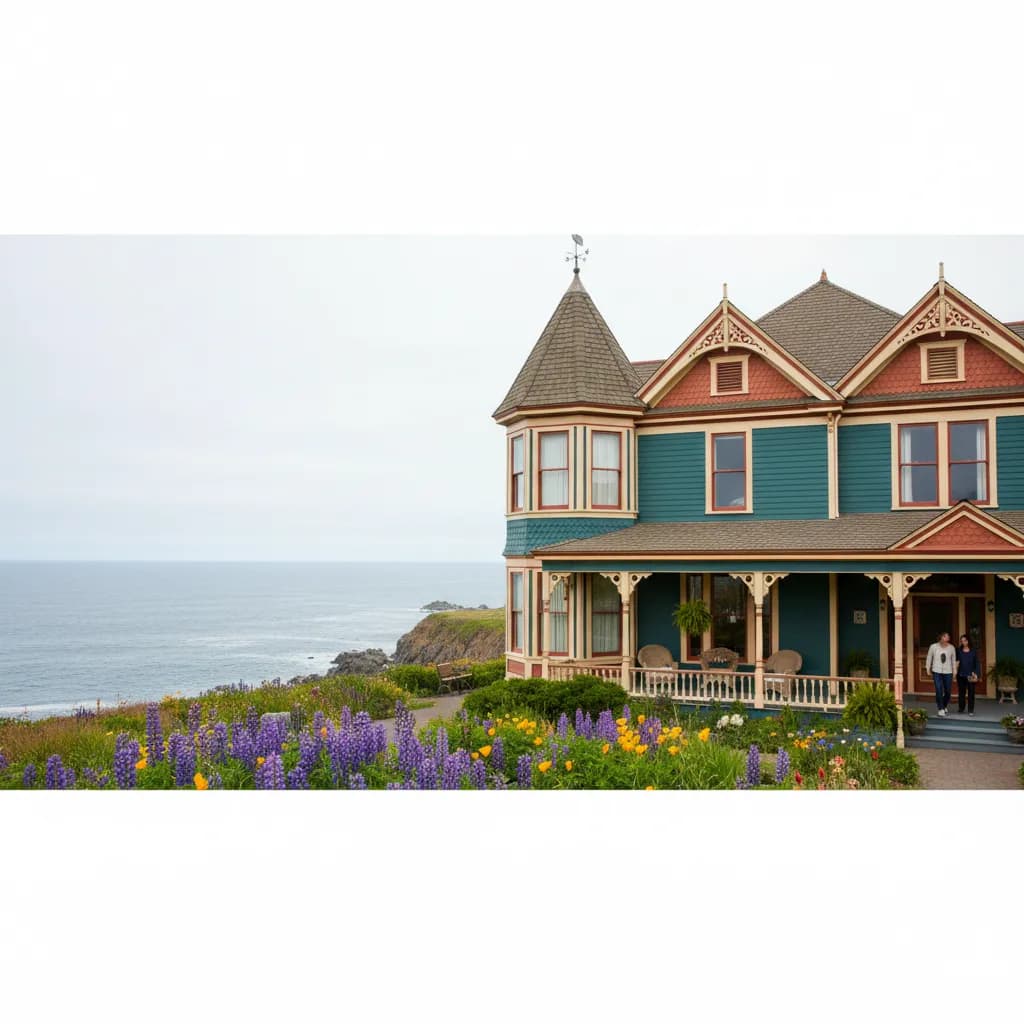
Queen Anne style buildings, constructed during the 1880s boom, incorporate corner towers, wraparound porches, and intricate millwork.
These architectural details weren't merely decorative; they demonstrated the quality of lumber produced by local mills and the craftsmanship of Finnish, Portuguese, and Italian immigrant workers who shaped both the industry and the town.
Many bed and breakfast properties occupy homes built by prominent logging families.
The preservation of these structures required decades of commitment from owners who recognized their historical value.
By the 1970s, when California's timber industry declined, Mendocino village faced potential deterioration.
Forward thinking residents transformed historic homes into visitor accommodation, creating an economic model that rewarded preservation rather than demolition.
Living History: The Bed and Breakfast Experience
Staying in Mendocino's historic inns offers insights impossible to gain from museum visits alone.
These working buildings retain original architectural features while providing modern comfort.
Guests sleep in rooms where lumber barons once planned business ventures, dine in parlors that hosted 19th century social gatherings, and walk floors constructed from virgin redwood harvested generations ago.
The village's bed and breakfast establishments vary in scale and style, but most share common characteristics rooted in Victorian era design.
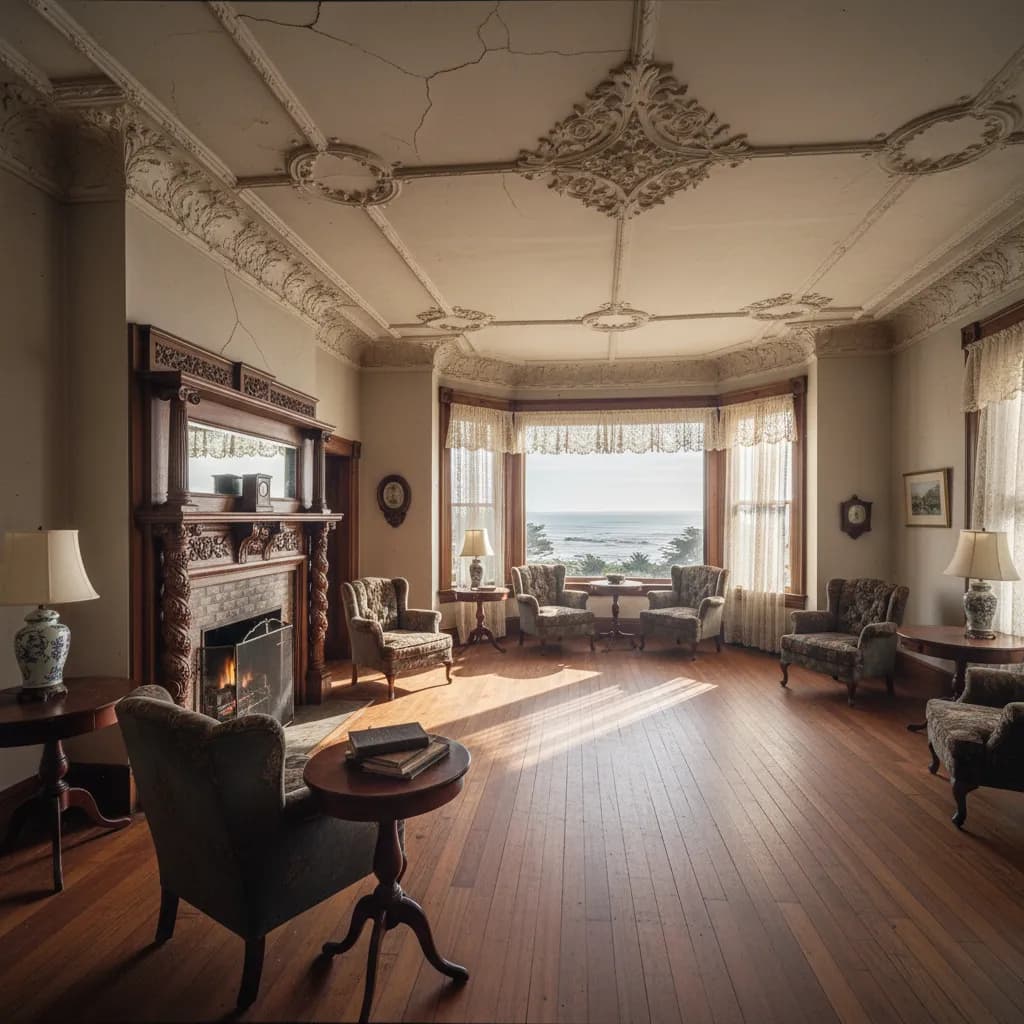
High ceilings with decorative plasterwork, bay windows capturing ocean views, and wood burning fireplaces create atmospheric spaces.
Many inns display period furnishings, though most balance historical authenticity with contemporary expectations for private bathrooms and comfortable beds.
Preservation Standards and Historical Integrity
Mendocino village's placement on the National Register of Historic Places in 1971 established guidelines that protect its architectural character.
Property owners maintaining historic inns must navigate preservation requirements while updating buildings for modern use.
This delicate balance involves retaining original exterior features, preserving significant interior elements, and using historically appropriate materials for repairs.
The village's strict design review process ensures that even necessary modifications respect Victorian architecture principles.
New electrical systems thread through walls without damaging original plasterwork.
Modern plumbing installations avoid disrupting period fixtures.
Innkeepers often become amateur historians, researching their buildings' origins and sharing stories with guests about former residents and architectural details.
Planning Your Historic Stay
Visitors seeking bed and breakfast accommodation in Mendocino village should consider seasonal patterns.
The September through November period offers ideal conditions, with clearest weather during the coast's "second summer" and fewer crowds than peak summer months.
This timing coincides with Anderson Valley's wine grape harvest and the beginning of mushroom foraging season, creating opportunities to combine historic lodging with culinary exploration.
Most historic inns require advance reservations, particularly for weekend stays and during special events like the Mendocino Music Festival or Whale Festival.
Many properties maintain minimum stay requirements during peak periods.
Prospective guests should inquire about specific room features, as Victorian era homes weren't designed with uniform layouts.
Some rooms offer ocean views, while others face village streets or gardens.
Staircase access, room sizes, and bathroom configurations vary significantly between properties.
Location and Access
Mendocino village sits approximately 150 miles north of San Francisco via Highway 1, a scenic coastal route requiring four to five hours of driving.
The village's compact layout makes it ideal for walking, with most bed and breakfast properties located within a few blocks of Main Street's galleries, restaurants, and shops.
Mendocino Headlands State Park surrounds the village on three sides, providing immediate access to dramatic coastal bluffs and the famous blowhole.
Visitors often combine their Mendocino village stay with exploration of nearby Fort Bragg, ten miles north.
The larger town offers additional dining and shopping options, including Mercato Bakery on Franklin Street, where Fort Bragg's Italian immigrant heritage lives on through traditional baking techniques and authentic focaccia that pairs beautifully with Anderson Valley wines.
Preserving the Past, Welcoming the Future
The transformation of Victorian homes into bed and breakfast establishments created an economic model that sustains both historic preservation and community vitality.
Unlike museum properties requiring public funding, working inns generate revenue that supports ongoing maintenance and restoration.
This practical approach to preservation ensures that Mendocino village's architectural heritage remains accessible to visitors while serving the community's economic needs.
Contemporary innkeepers balance multiple roles: hospitality professionals, preservation advocates, and historical interpreters.
Their commitment maintains buildings that might otherwise succumb to coastal weather's harsh effects.
Salt air, winter storms, and persistent moisture challenge even well maintained structures.
Regular painting, foundation repairs, and roof replacements require significant investment that accommodation revenue makes possible.
Visitors choosing historic bed and breakfast lodging directly support preservation efforts while experiencing Victorian architecture as it was intended: as living space that shelters, comforts, and connects people to place.
Each overnight stay contributes to maintaining these irreplaceable structures for future generations, ensuring that Mendocino village's distinctive character endures as both historical record and welcoming destination.
The Mendocino Coastal Chronicle documents the natural beauty, cultural heritage, and historical significance of the Mendocino Coast for visitors, students, and researchers. Our articles combine historical research, ecological science, and cultural appreciation to celebrate this unique region.
Educational Resources: For current visitor information, hours, and fees, please contact local visitor centers and state park offices. Conditions and regulations may change seasonally.
Indigenous Acknowledgment: The Mendocino Coast is the ancestral homeland of the Pomo and Yuki peoples, who have stewarded these lands for thousands of years. We honor their continuing connection to this place.
Published by the Mendocino Coastal Chronicle | Educational content for the appreciation and understanding of California's North Coast heritage.